Tradition and simplicity, are evidence of a rural heritage that has never been forgotten. Genuine dishes, poor ingredients, but with an unmistakable flavour: from truffles to pork products, from cheeses to porchetta, from roast lamb to soft, delicate dishes made with pulses and cereals, such as the simple mixture of water and flour from which the famous Strangozzi are made.
Tradition and simplicity, are evidence of a rural heritage that has never been forgotten. Genuine dishes, poor ingredients, but with an unmistakable flavour: from truffles to pork products, from cheeses to porchetta, from roast lamb to soft, delicate dishes made with pulses and cereals, such as the simple mixture of water and flour from which the famous Strangozzi are made.
This exceptional underground mushroom can vary in size from the size of a walnut to the size of an apple.
At least two species can be found in the woods along the Sagrantino Wine Route:
This is the name given, in this area, to water-and-flour pasta, the use of which is common throughout the rest of the region under the various names of pici, bigoli, cordelle, strozzapreti or precisely strangozzi.
The name changes but not the best of this dish, which remains among the oldest in the area's cuisine. It is a 'poor' pasta, as it does not include the use of eggs and the dish is usually accompanied by meatless sauces: truffle, tomato, chilli, asparagus and mushroom. This type of pasta requires more effort: in fact, as there are not eggs to bind the flour, the dough must be rather consistent and almost hard.
Spelt, cultivated in the territory of the Sagrantino Wine Route, is the oldest cereal that has survived to the present day.
Over the centuries, the peasant diet has made particular use of spelt: rich in carbohydrates, calcium and phosphorous, used in the preparation of soups together with legumes, it makes it possible to obtain a 'poor man's dish' that in terms of protein and other nutritional substances is substantially comparable to a meat dish. Currently, following the increased interest in organic products, the search for healthy and natural foods has led to the rediscovery of spelt in the diet.
Pork culture is highly developed in this area. Especially in the winter months, starting from mid-January when the pig is traditionally 'ready' to delight our palates, braciole, puntarelle, fegatelli, slices of fat and lean and all parts of the animal not intended for the preparation of sausages are frequently present on the tables in this area.
The well-known tastiness of Umbrian cuisine is due in large part not only to the raw materials but also to the use of seasonings Lard, i.e. the fat of the pig, especially in the past replaced oil in the preparation of soups and sauces because, beaten together with herbs, it gave them a strong flavour and, at the same time, provided a considerable calorie intake. Lard, i.e. the product of melting the lard itself, entered into the preparation of roasts either as a 'pillotto' (it was inserted together with the herbs into the cuts made in the pieces of meat) or sprinkled on the meat itself while turning on the spit.
The preparation of pork in 'porchetta' deserves a separate discussion.
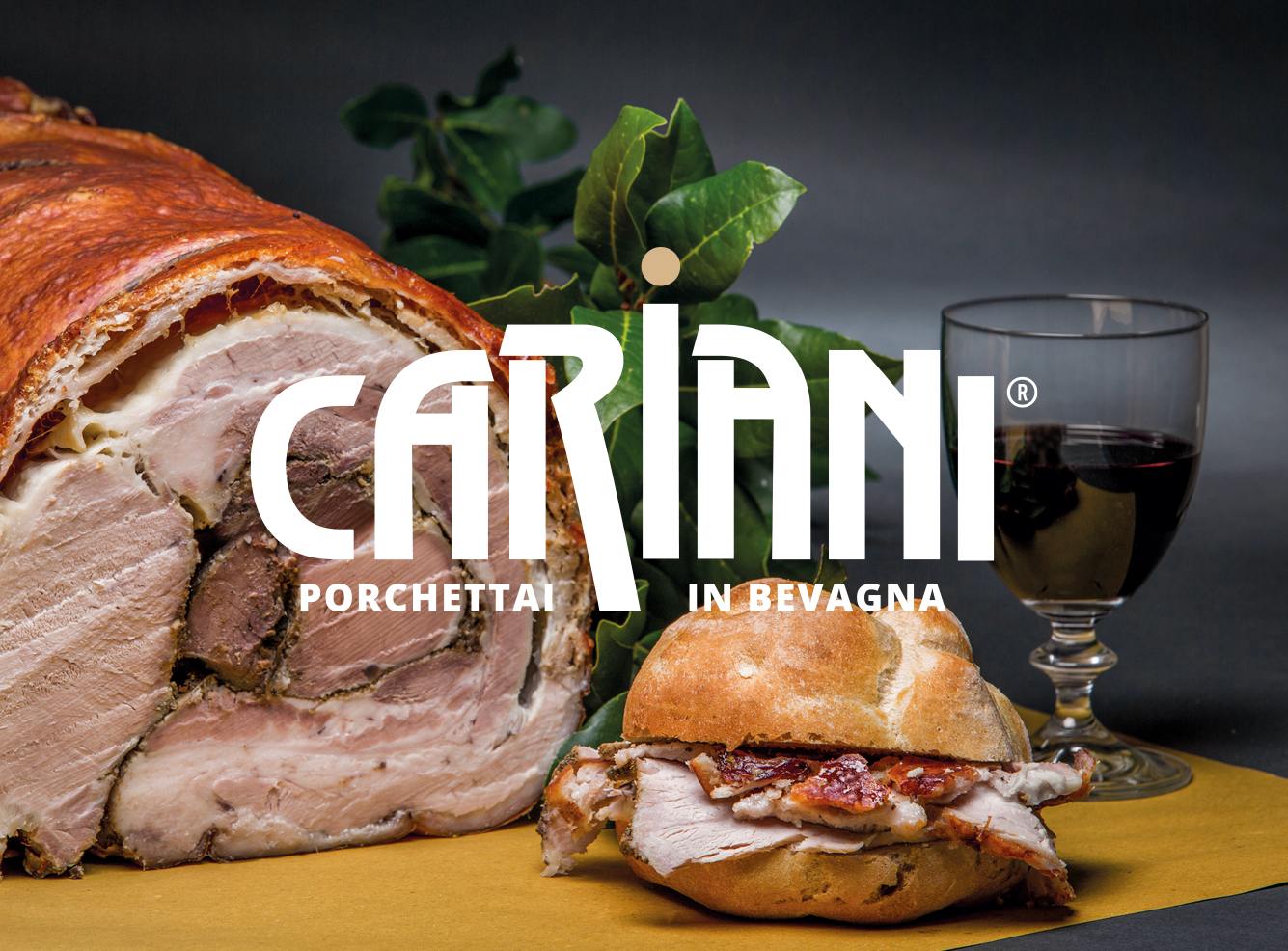
Porchetta, a product obtained by cooking all parts of the pig, is boned, seasoned and flavoured, and finally tied with string. The slow cooking process favours a crispy, golden crust.
A procedure is well known since the Etruscans and ancient Romans. Jealously preserved, porchetta is one of Bevagna's typical products.
It is, on the other hand, the small village of Grutti, in Gualdo Cattaneo, that is the birthplace of the famous "Cicotto", now a Slow Food Presidium, which for generations, from father to son, has handed down the recipe: ears, trotters, shanks, tongue, tripe and other selected offal of the pig, carefully placed in the oven, in slow cooking, under its Porchetta, from which it will collect the aromas and cooking liquids, for a unique, rich and aromatic taste.
Honey production is linked to the presence of bees in the territory, their distribution, and their state of health, but not everyone realises that the final quality of the product is also conditioned by the quality of the flowers, from which the very active insects draw their precious nectar.
In the popular wisdom of Italy, and of Umbria-Lazio-Marches in particular, there is the belief that honey's therapeutic virtues are numerous, including its action on ailments of the respiratory, circulatory and digestive systems, as well as on children's teething: it is no coincidence, therefore, that the most typical Umbrian sweets are still sweetened with honey today.
The largest quantity of honey produced in Umbria is of the 'millefiori' type, but there is no lack of 'unifloral' production, i.e. linked to a single variety of flowers such as clover, sulla, sunflower and acacia. The latter, unlike the others which tend to crystallise a few weeks after their extraction from the combs, can remain in a liquid state for many months.
This exceptional underground mushroom can vary in size from the size of a walnut to the size of an apple.
At least two species can be found in the woods along the Sagrantino Wine Route:
This is the name given, in this area, to water-and-flour pasta, the use of which is common throughout the rest of the region under the various names of pici, bigoli, cordelle, strozzapreti or precisely strangozzi.
The name changes but not the best of this dish, which remains among the oldest in the area's cuisine. It is a 'poor' pasta, as it does not include the use of eggs and the dish is usually accompanied by meatless sauces: truffle, tomato, chilli, asparagus and mushroom. This type of pasta requires more effort: in fact, as there are not eggs to bind the flour, the dough must be rather consistent and almost hard.
Spelt, cultivated in the territory of the Sagrantino Wine Route, is the oldest cereal that has survived to the present day.
Over the centuries, the peasant diet has made particular use of spelt: rich in carbohydrates, calcium and phosphorous, used in the preparation of soups together with legumes, it makes it possible to obtain a 'poor man's dish' that in terms of protein and other nutritional substances is substantially comparable to a meat dish. Currently, following the increased interest in organic products, the search for healthy and natural foods has led to the rediscovery of spelt in the diet.
Pork culture is highly developed in this area. Especially in the winter months, starting from mid-January when the pig is traditionally 'ready' to delight our palates, braciole, puntarelle, fegatelli, slices of fat and lean and all parts of the animal not intended for the preparation of sausages are frequently present on the tables in this area.
The well-known tastiness of Umbrian cuisine is due in large part not only to the raw materials but also to the use of seasonings Lard, i.e. the fat of the pig, especially in the past replaced oil in the preparation of soups and sauces because, beaten together with herbs, it gave them a strong flavour and, at the same time, provided a considerable calorie intake. Lard, i.e. the product of melting the lard itself, entered into the preparation of roasts either as a 'pillotto' (it was inserted together with the herbs into the cuts made in the pieces of meat) or sprinkled on the meat itself while turning on the spit.
The preparation of pork in 'porchetta' deserves a separate discussion.
Porchetta, a product obtained by cooking all parts of the pig, is boned, seasoned and flavoured, and finally tied with string. The slow cooking process favours a crispy, golden crust.
A procedure is well known since the Etruscans and ancient Romans. Jealously preserved, porchetta is one of Bevagna's typical products.
It is, on the other hand, the small village of Grutti, in Gualdo Cattaneo, that is the birthplace of the famous "Cicotto", now a Slow Food Presidium, which for generations, from father to son, has handed down the recipe: ears, trotters, shanks, tongue, tripe and other selected offal of the pig, carefully placed in the oven, in slow cooking, under its Porchetta, from which it will collect the aromas and cooking liquids, for a unique, rich and aromatic taste.
Honey production is linked to the presence of bees in the territory, their distribution, and their state of health, but not everyone realises that the final quality of the product is also conditioned by the quality of the flowers, from which the very active insects draw their precious nectar.
In the popular wisdom of Italy, and of Umbria-Lazio-Marches in particular, there is the belief that honey's therapeutic virtues are numerous, including its action on ailments of the respiratory, circulatory and digestive systems, as well as on children's teething: it is no coincidence, therefore, that the most typical Umbrian sweets are still sweetened with honey today.
The largest quantity of honey produced in Umbria is of the 'millefiori' type, but there is no lack of 'unifloral' production, i.e. linked to a single variety of flowers such as clover, sulla, sunflower and acacia. The latter, unlike the others which tend to crystallise a few weeks after their extraction from the combs, can remain in a liquid state for many months.