Posted inWinery, Gualdo Cattaneo
Pennacchi Domenico Az. Agr.
Nata nel 1993, l’azienda agricola di Domenico Pennacchi produce Sagrantino Scopri di più »
Known as "the village of castles" for its extensive circuit of more than a dozen of them, its views take us back to medieval times with its constructions at lookout and defense points.
Area
96,79 km²
Population
6.065 (2017)
Known as "the village of castles" for its extensive circuit of more than a dozen of them, its views take us back to medieval times with its constructions at lookout and defense points.
Area
96,79 km²
Population
6.065 (2017)
Gualdo CattaneoPerched on the slopes of the Martani Mountains, Gualdo Cattaneo rises among woods and gentle hills covered with vineyards and olive groves, overlooking the Umbra Valley and the Tiberina Valley. It is the heart of a system of castles and medieval constructions that are configured as a true defensive system, earning it the appellation 'village of castles'.
The earliest documents concerning its foundation date back to 975 when Emperor Otto II of Saxony gave it as a fief to the Germanic Count Edoardo Cattaneo, after whom the main street of the historic center is named. The name of the village is a combination of two words: Wald, a German word meaning 'forest, wood' and the name of the founder, Count Edoardo Cattaneo.
The historic center is largely enclosed by walls and develops in a dense network of alleys, stairways, hanging gardens and lanes. In the main square stands "La Rocca".
Known as "the village of castles" for its extensive circuit of more than a dozen of them, its views take us back to medieval times with its constructions at lookout and defense points.
The Rocca is an example of this and is the main node of this complex system of castles and fortified villages, placed, over the centuries, to safeguard the territory, whose visit constitutes a fascinating itinerary. In the Church of Saints Antonio and Antonino and in the Church of Saints Terenziano and Flacco, you can discover the ancient history of this territory, told through its stones , which have been appreciated since Roman times for the quality of the material and the prestige of the workmanship of the local labor force. The Romans called it 'loco petroso' for the rich stone quarries that characterised its conformation and make it, even today, famous in the ancient art of stonemasons for working the typical white and pink stone.
Between the end of August and the beginning of September, the streets of the center of Gualdo Cattaneo come alive with a historical festival that ends on 3rd of September with the Palio dell'Arrampicata. The town is again divided into three contrade, each represented by a prior who is invested on the day of the patron saint, after having sworn to protect the people from outside attacks. The contrade are: Monte, Rocca, Pieve. During the festival, the three districts challenge each other in various games that culminate with L’Arrampicata: a race that historically recalls the line of assaults on the castle of Gualdo Cattaneo by neighboring towns. Everything ends with a firework display that illuminates the imposing Rocca and the center of Gualdo, in an evocative and unrepeatable scenario.
Gualdo CattaneoPerched on the slopes of the Martani Mountains, Gualdo Cattaneo rises among woods and gentle hills covered with vineyards and olive groves, overlooking the Umbra Valley and the Tiberina Valley. It is the heart of a system of castles and medieval constructions that are configured as a true defensive system, earning it the appellation 'village of castles'.
The earliest documents concerning its foundation date back to 975 when Emperor Otto II of Saxony gave it as a fief to the Germanic Count Edoardo Cattaneo, after whom the main street of the historic center is named. The name of the village is a combination of two words: Wald, a German word meaning 'forest, wood' and the name of the founder, Count Edoardo Cattaneo.
The historic center is largely enclosed by walls and develops in a dense network of alleys, stairways, hanging gardens and lanes. In the main square stands "La Rocca".
Known as "the village of castles" for its extensive circuit of more than a dozen of them, its views take us back to medieval times with its constructions at lookout and defense points.
The Rocca is an example of this and is the main node of this complex system of castles and fortified villages, placed, over the centuries, to safeguard the territory, whose visit constitutes a fascinating itinerary. In the Church of Saints Antonio and Antonino and in the Church of Saints Terenziano and Flacco, you can discover the ancient history of this territory, told through its stones , which have been appreciated since Roman times for the quality of the material and the prestige of the workmanship of the local labor force. The Romans called it 'loco petroso' for the rich stone quarries that characterised its conformation and make it, even today, famous in the ancient art of stonemasons for working the typical white and pink stone.
Between the end of August and the beginning of September, the streets of the center of Gualdo Cattaneo come alive with a historical festival that ends on 3rd of September with the Palio dell'Arrampicata. The town is again divided into three contrade, each represented by a prior who is invested on the day of the patron saint, after having sworn to protect the people from outside attacks. The contrade are: Monte, Rocca, Pieve. During the festival, the three districts challenge each other in various games that culminate with L’Arrampicata: a race that historically recalls the line of assaults on the castle of Gualdo Cattaneo by neighboring towns. Everything ends with a firework display that illuminates the imposing Rocca and the center of Gualdo, in an evocative and unrepeatable scenario.
Gualdo CattaneoPerched on the slopes of the Martani Mountains, Gualdo Cattaneo rises among woods and gentle hills covered with vineyards and olive groves, overlooking the Umbra Valley and the Tiberina Valley. It is the heart of a system of castles and medieval constructions that are configured as a true defensive system, earning it the appellation 'village of castles'.
The earliest documents concerning its foundation date back to 975 when Emperor Otto II of Saxony gave it as a fief to the Germanic Count Edoardo Cattaneo, after whom the main street of the historic center is named. The name of the village is a combination of two words: Wald, a German word meaning 'forest, wood' and the name of the founder, Count Edoardo Cattaneo.
The historic center is largely enclosed by walls and develops in a dense network of alleys, stairways, hanging gardens and lanes. In the main square stands "La Rocca".
Known as "the village of castles" for its extensive circuit of more than a dozen of them, its views take us back to medieval times with its constructions at lookout and defense points.
The Rocca is an example of this and is the main node of this complex system of castles and fortified villages, placed, over the centuries, to safeguard the territory, whose visit constitutes a fascinating itinerary. In the Church of Saints Antonio and Antonino and in the Church of Saints Terenziano and Flacco, you can discover the ancient history of this territory, told through its stones , which have been appreciated since Roman times for the quality of the material and the prestige of the workmanship of the local labor force. The Romans called it 'loco petroso' for the rich stone quarries that characterised its conformation and make it, even today, famous in the ancient art of stonemasons for working the typical white and pink stone.
Between the end of August and the beginning of September, the streets of the center of Gualdo Cattaneo come alive with a historical festival that ends on 3rd of September with the Palio dell'Arrampicata. The town is again divided into three contrade, each represented by a prior who is invested on the day of the patron saint, after having sworn to protect the people from outside attacks. The contrade are: Monte, Rocca, Pieve. During the festival, the three districts challenge each other in various games that culminate with L’Arrampicata: a race that historically recalls the line of assaults on the castle of Gualdo Cattaneo by neighboring towns. Everything ends with a firework display that illuminates the imposing Rocca and the center of Gualdo, in an evocative and unrepeatable scenario.
Nata nel 1993, l’azienda agricola di Domenico Pennacchi produce Sagrantino Scopri di più »
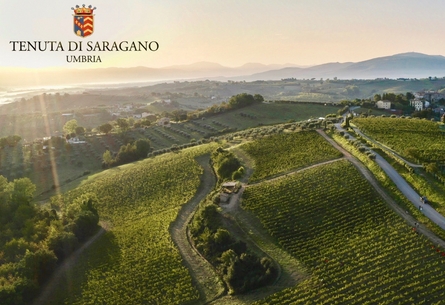
La cantina si trova tra le colline di Gualdo Cattaneo, Scopri di più »
Montefalco è la nostra ispirazione. Situato in cima a una Scopri di più »
Nata nel 1993, l’azienda agricola di Domenico Pennacchi produce Sagrantino di Montefalco nella versione secco e passito, Umbria Rosso IGT Scopri di più »
Montefalco è la nostra ispirazione. Situato in cima a una collina che domina la pianura, viene soprannominata “Ringhiera dell’Umbria”. Da Scopri di più »
La cantina si trova tra le colline di Gualdo Cattaneo, a soli 5 km dal centro storico di Montefalco. La Scopri di più »
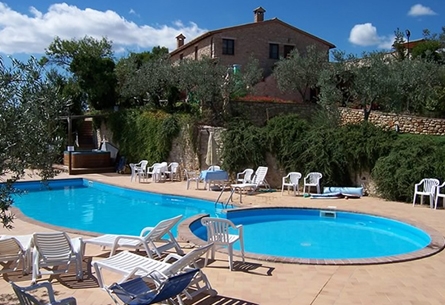
L'agriturismo la Casella è immerso nel cuore della verde Umbria, Scopri di più »
L'agriturismo la Casella è immerso nel cuore della verde Umbria, tra il silenzio e la quiete delle colline, dove storia Scopri di più »